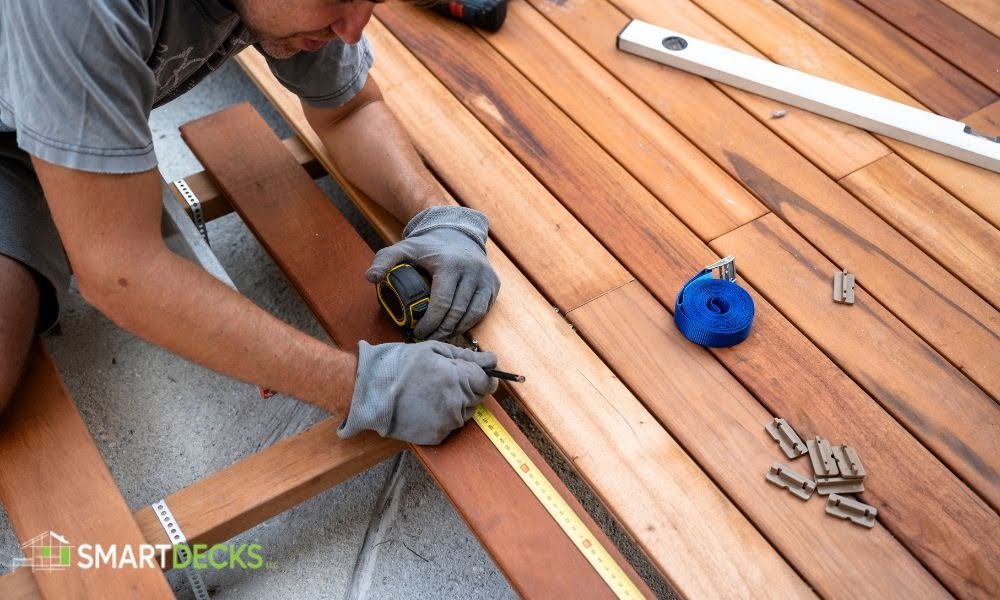

Finding the right materials is one of the most consequential decisions in any deck project. The wrong product in the Pacific Northwest’s climate can fail within five years. The right one can outlast the structure itself. Kent, WA sits in King County, where annual rainfall averages 38 inches and surface moisture lingers year-round on horizontal structures.
Those conditions eliminate several material categories outright and make supplier relationships and product sourcing decisions far more important than most homeowners realize. If you are planning a deck installation in Kent, WA, this guide covers where materials come from, what specifications matter, and why working with an established local builder changes your access to both pricing and product quality.
What Deck Material Categories Are Available in Kent
Kent homeowners building a new deck have four primary surface material categories to choose from. Each performs differently in western Washington’s climate.
- Pressure-treated lumber: Treated with copper azole (CA) or micronized copper quaternary (MCQ) compounds to resist rot and insects. Ground-contact rated lumber carries a retention level of 0.40 pounds per cubic foot (pcf). Above-ground applications use 0.15 pcf. It is the most budget-accessible option but requires annual sealing to prevent surface checking.
- Cedar: Contains natural tannins that resist fungal decay without chemical treatment. Western red cedar, harvested primarily in British Columbia and the Pacific Northwest, has a Janka hardness rating of 350 lbf. It grays naturally without treatment and accepts stain well when kept clean.
- Composite decking: Engineered from wood fiber and recycled polyethylene or polypropylene. Capped composite boards have a protective polymer shell that resists moisture absorption at the surface level. Uncapped boards absorb moisture at the cut ends and should be sealed during installation.
- PVC decking: Made entirely from cellular polyvinyl chloride with zero wood content. PVC does not absorb moisture under any condition, making it the strongest performer in applications with standing water exposure, such as rooftop decks or covered outdoor areas.
Where to Source Deck Materials Locally in Kent
Several suppliers serve the Kent area for residential deck materials. Each has strengths depending on what you need.
- Big-box retailers (The Home Depot on 84th Ave S, Lowe’s in nearby Renton) stock pressure-treated lumber, basic cedar, and entry-level composite brands. They are accessible for small repairs and framing lumber but carry limited composite selections and rarely stock premium product lines in full color ranges.
- Specialty lumber yards in the greater Seattle and Tacoma metro area carry wider selections of clear cedar, premium hardwoods, and full composite product lines. Dunn Lumber, with locations in Seattle and Bellevue, is a regional supplier with strong composite inventory and knowledgeable staff familiar with Pacific Northwest installation requirements.
- Direct distributor access is available through certified installers. SmartDecks, as a Deckorators Certified Elite installer, sources Deckorators composite and PVC products through manufacturer-direct channels. That certification gives their clients access to product grades and colorways not always stocked at retail, along with manufacturer-backed warranty coverage that requires certified installation to activate.
What to Look for When Buying Composite Decking
Not all composite products perform equally in western Washington. When evaluating a composite board, check these specifications before purchasing.
- Cap type: Four-sided capping (all faces and edges) outperforms three-sided or uncapped boards in moisture resistance. Four-sided capped products from brands like Deckorators and TimberTech show less staining and edge swelling over time.
- Joist spacing requirements: Most composite boards require joists at 16 inches on center for straight decking and 12 inches on center for diagonal patterns. Some premium PVC boards allow 24-inch spacing. Buying the wrong product for your framing layout creates structural problems after installation.
- Thermal expansion rate: Composite boards expand and contract more than wood. In Kent’s temperature range of roughly 20°F to 90°F, a 16-foot composite board can expand or contract up to 3/8 inch longitudinally. Proper gap spacing at installation is product-specific and listed in manufacturer installation guides.
- Warranty scope: Premium composite warranties cover fade, stain, and structural integrity separately. A fade warranty that covers only 5 Delta E units of color change over 25 years is meaningfully different from one covering unlimited fade. Read the warranty document, not the marketing summary.
Framing and Structural Materials: What Goes Under the Deck
The surface decking gets the attention, but the substructure determines how long the deck lasts. In Kent’s climate, pressure-treated framing is standard for all structural components, including ledger boards, posts, beams, and joists.
Washington State’s residential building code requires deck ledger connections to use approved hardware rated for the loads involved. Simpson Strong-Tie LUS and LSSZ series hangers are commonly specified for joist-to-beam connections. Post bases must be rated for ground contact or elevated above concrete to prevent moisture wicking into the end grain.
Post material selection matters. A 6×6 pressure-treated post rated for ground contact carries a chemical retention level of 0.60 pcf. A post rated only for above-ground use at 0.15 pcf will fail at the concrete interface within a few years. Many homeowners buying materials at retail unknowingly purchase the wrong retention level for their application.
Hidden Costs in DIY Material Purchasing
Buying materials independently without professional guidance frequently results in cost overruns that exceed the savings from avoiding labor.
Common material purchasing errors include:
- Underestimating board coverage: Composite boards have actual dimensions smaller than nominal sizes. A “5/4 x 6” composite board has an actual width of 5.5 inches. Running length calculations off nominal dimensions produces short orders that delay projects.
- Wrong fastener systems: Most composite brands require proprietary hidden fastener clips rather than face screws. Using incorrect fasteners voids the material warranty and creates surface dimpling over time.
- Missing permit-required hardware: The City of Kent Permit Center inspects for code-required hardware at ledger connections, post bases, and guard rail attachment points. Missing hardware fails inspection regardless of how clean the surface looks.
- Inadequate waste factor: Standard waste allowance for straight decking is 10 percent. Diagonal patterns, picture framing, and decks with irregular shapes require 15 to 20 percent waste allowance.
How SmartDecks Sources Materials for Kent Projects
SmartDecks builds with composite and PVC decking from Deckorators, for which they hold Certified Elite installer status, and TimberTech. Both product lines are suited to Kent’s wet climate and carry long-term manufacturer warranties when installed by certified contractors.
Their framing materials meet or exceed King County code requirements for post base ratings, joist hanger specifications, and ledger attachment hardware. Every project starts with a free on-site consultation that includes a materials recommendation based on your specific site conditions, budget, and maintenance preferences.